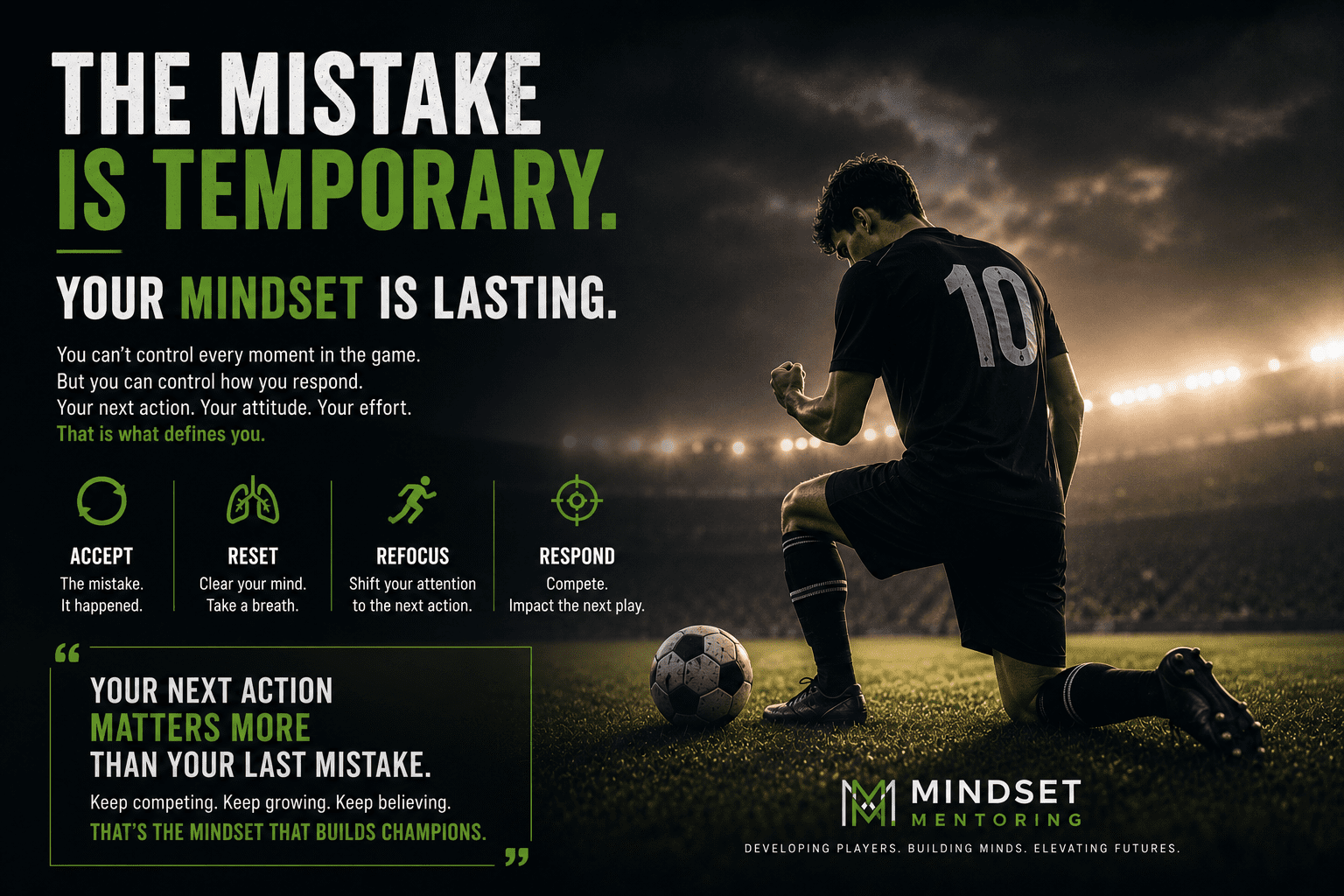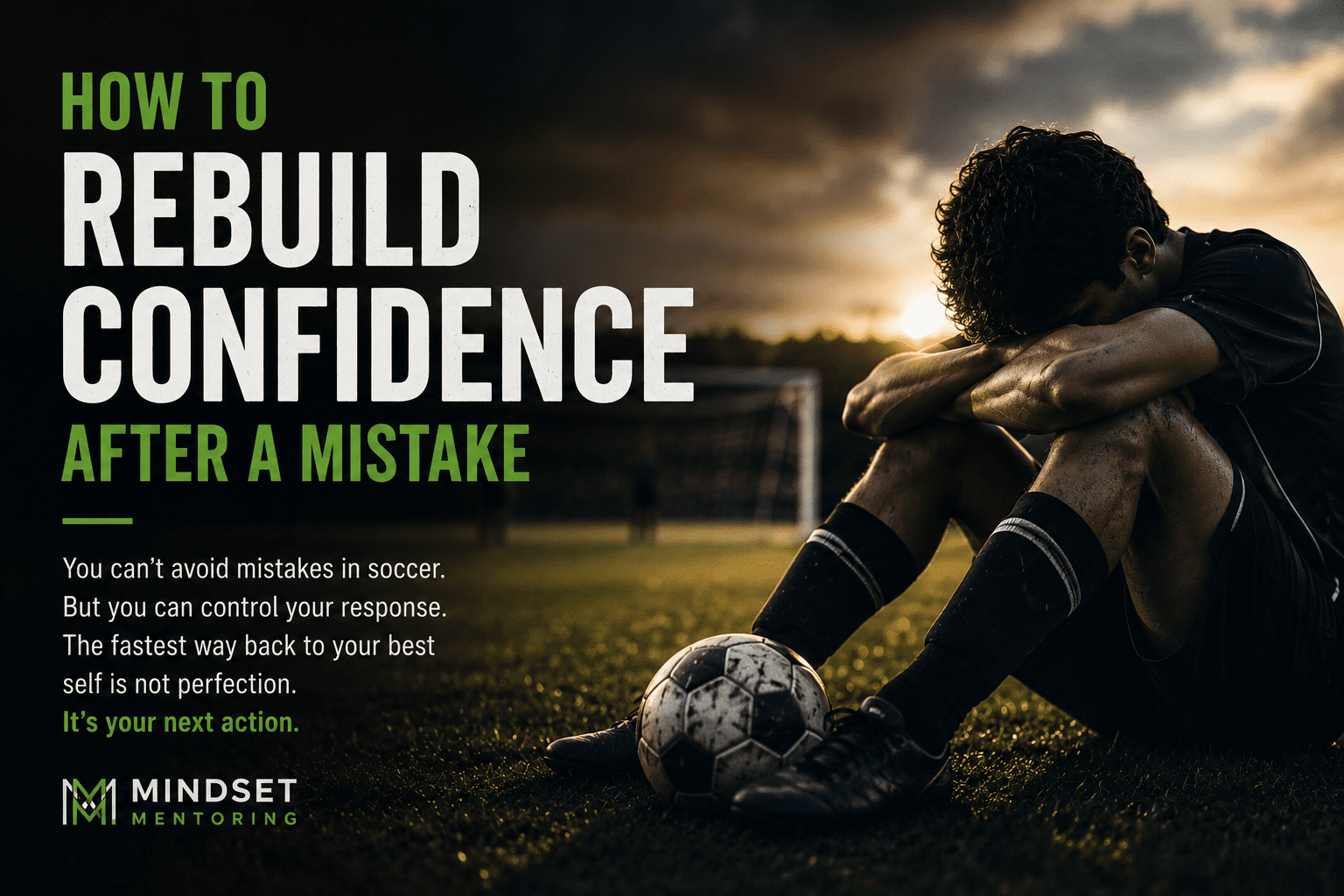
How to Rebuild Confidence After a Mistake
Confidence isn’t lost in a mistake. It’s lost in the meaning you give to the mistake.
Every soccer player knows the feeling.
You misplace a simple pass. Or you miss an open chance. Or you lose a crucial duel. Or you make a mistake that leads to a goal…
In a matter of seconds, something changes.
You stop demanding the ball. You play safe. You hesitate. You start thinking instead of playing.
And suddenly, the mistake that lasted two seconds begins affecting the next twenty minutes.
The truth is that most players don’t struggle because of the mistake itself.
They struggle because of their reaction to it.
The players who reach the highest levels understand something different:
Mistakes are part of the game. Confidence is built in the response.
Mistakes don't destroy confidence. The meaning you give them does.
Antoni Ordinas - Founder of MINDSET Mentoring
Why One Mistake Can Change Everything
Soccer is a fast and emotional sport.
Every action provides immediate feedback.
A successful dribble creates confidence. A missed chance creates frustration. A bad pass creates doubt.
The challenge is that your brain is constantly interpreting what happens.
The mistake is the event.
Your interpretation is the story.
And the story determines the response.
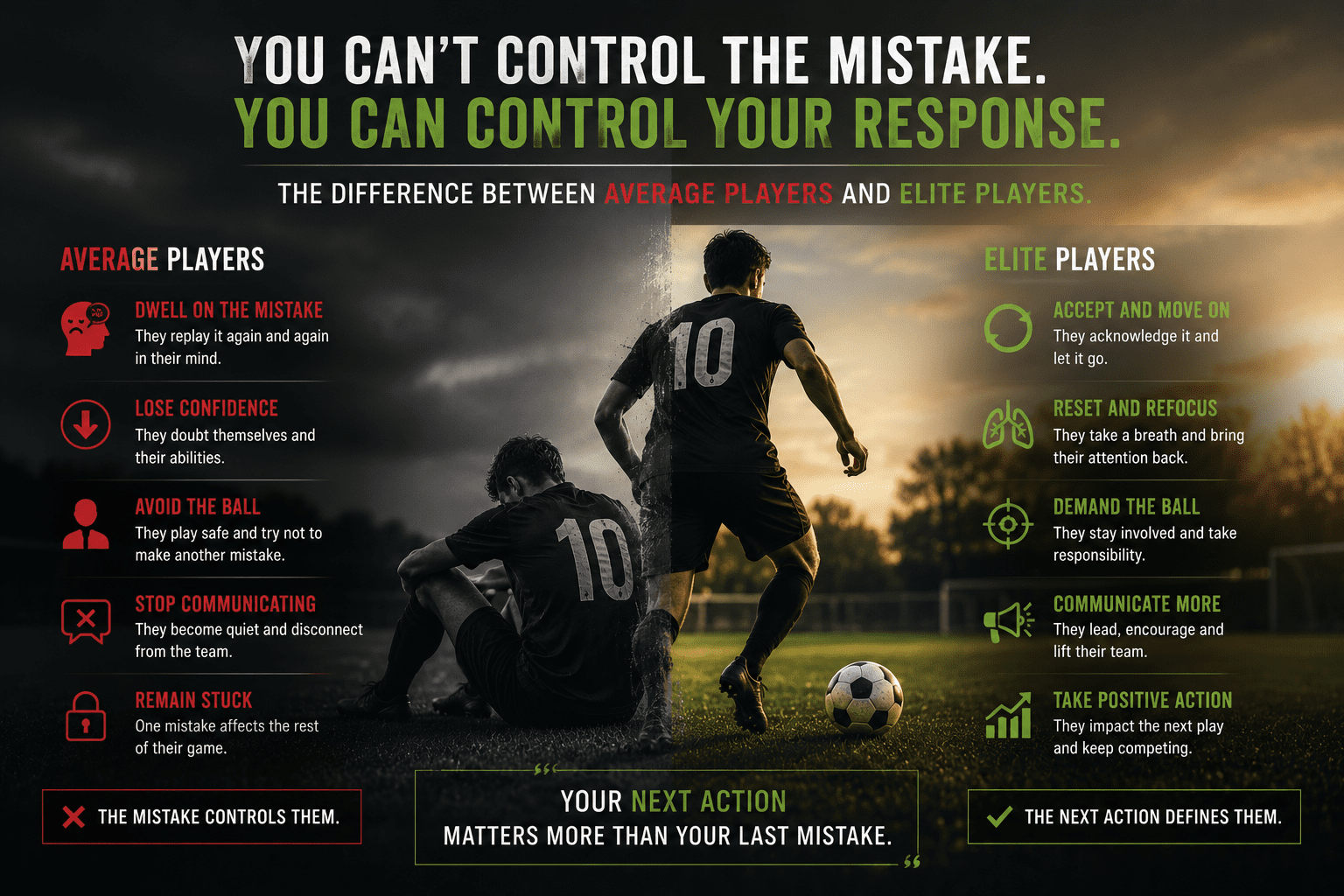
Consider these two players:
Player A
After making a mistake:
- loses confidence
- stops communicating
- avoids risk
- hides from responsibility.
Internally, the player thinks:
“I can’t believe I did that.”
“Coach is probably disappointed.”
“I need to avoid another mistake.”
The result?
Performance drops.
Player B
After making the same mistake:
- demands the ball again
- stays active
- communicates more
- increases focus.
Internally, the player thinks:
“Reset.”
“Learn.”
“Next action.”
The result?
Performance remains stable.
The situation is identical. The interpretation is different.
That difference is often what separates average performers from elite performers.
The Confidence Myth
Many young players believe confidence comes from:
playing well
scoring goals
receiving praise
being selected
But if confidence depends on results, it becomes fragile.
Because results change.
Every player:
- misses chances
- loses games
- gets substituted
- spends time on the bench
- faces criticism.
If confidence depends on perfection, it will disappear regularly.
Elite players build confidence differently.
They build confidence through:
Preparation
They trust the work they have done.
Experience
They understand mistakes are part of growth.
Identity
They know who they are regardless of one moment.
This creates what we call:
Stable Confidence
The type of confidence that survives setbacks.
The players who grow the most are not those who avoid mistakes, but those who learn from them fastest.
Antoni Ordinas - Founder of MINDSET Mentoring
What Elite Players Understand About Mistakes
Think about the best players in the world.
They all make mistakes.
Every single match.
Even players such as Lionel Messi, Cristiano Ronaldo, and Alexia Putellas lose possession, miss chances, and make poor decisions.
The difference isn’t that they make fewer mistakes. The difference is that they recover faster.
Elite players have learned an important principle:
Your bounce-back speed is often more important than your mistake rate.
A player who recovers in five seconds will outperform a player who spends five minutes dwelling on an error.
EXPLORE OUR PATHWAYS AND BUILD UNSHAKABLE CONFIDENCE
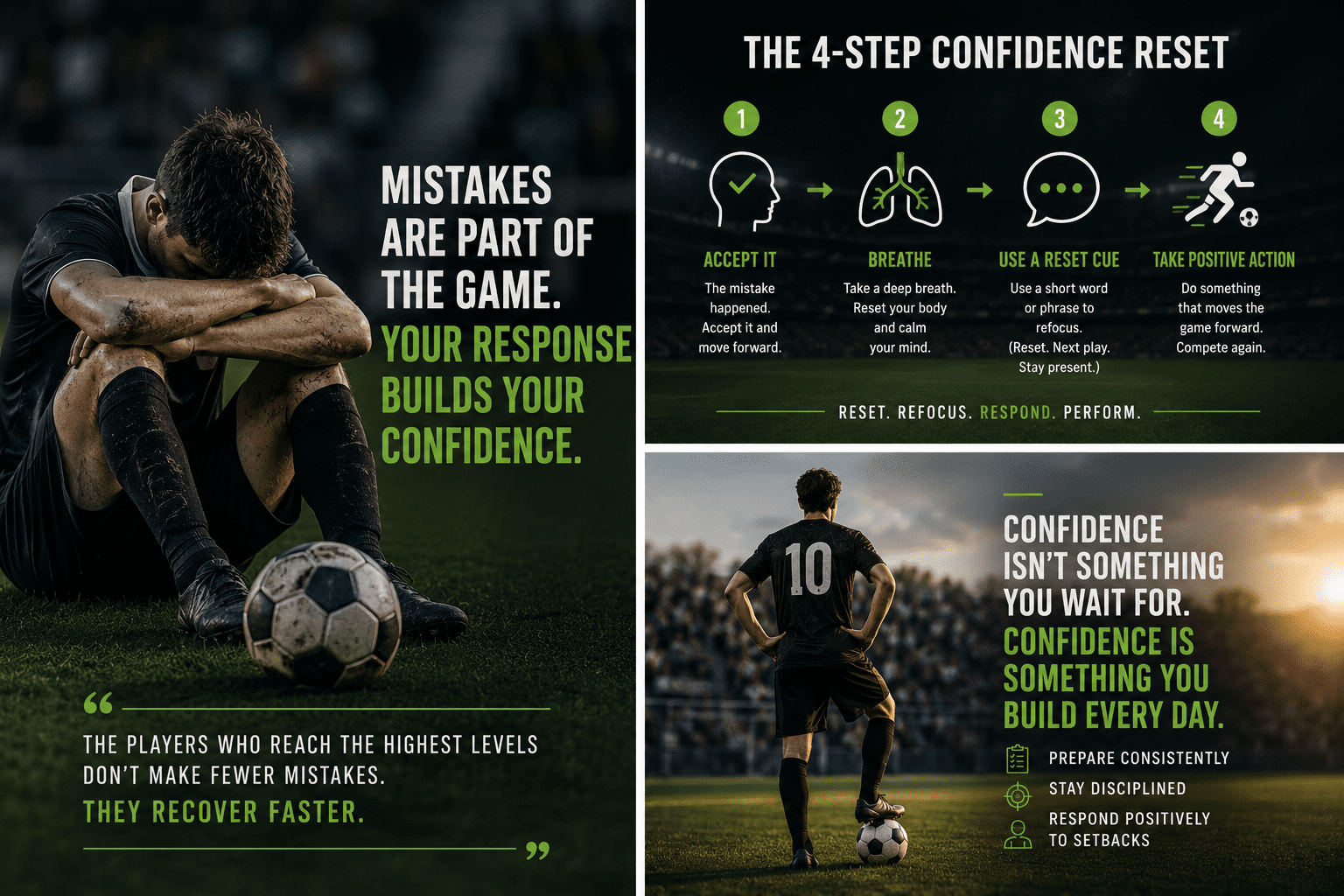
The 4-Step Confidence Reset
When a mistake happens during a match, use this process.
Step 1: Accept It
Don’t fight reality.
The mistake happened.
Accepting it immediately saves valuable mental energy.
Instead of:
❌ “Why did I do that?”
Use:
✅ “It happened.”
Acceptance is not surrender. It’s clarity.
Step 2: Breathe
Pressure creates tension.
Tension narrows attention.
One controlled breath helps reset your nervous system.
Try:
Inhale for 4 seconds.
Exhale for 4 seconds.
Simple. Powerful. Immediate.
Step 3: Use a Reset Cue
Elite players often use short internal commands.
Examples:
“Next play.”
“Reset.”
“Stay present.”
“Compete.”
Short messages work better than long conversations.
Your brain needs direction, not drama.
Step 4: Take Positive Action
The fastest way to rebuild confidence is action.
Not thinking. Action.
Demand the next pass. Communicate.
Press. Make the next run. Win the next duel.
Confidence grows when movement replaces hesitation.
The Hidden Trap: Playing Not to Fail
After a mistake, many players enter survival mode.
Instead of trying to influence the game, they try to avoid another error.
This creates:
- passive play
- slower decisions
- less creativity
- reduced impact.
Ironically, trying not to fail often increases the likelihood of poor performance.
Elite players think differently.
They don’t ask:
“How can I avoid mistakes?”
They ask:
“How can I impact the game?”
That mindset keeps them engaged and dangerous.
A mistake changes nothing about your potential. Your response changes everything about your future.
Antoni Ordinas - Founder of MINDSET Mentoring
A Simple Reflection Exercise
After your next match, answer these three questions:
1. What was my biggest mistake?
Describe it objectively.
No emotions.
Just facts.
2. How did I react?
Did you hide?
Or compete?
3. What will I do differently next time?
Create a clear plan.
Growth begins with awareness.
The Elite Insight
Many players believe confidence creates performance.
In reality, the relationship often works the other way around.
Performance habits create confidence.
The players who:
prepare consistently,
train with purpose,
stay disciplined,
respond positively after setbacks,
gradually develop confidence that doesn’t depend on results.
As we teach at MINDSET Mentoring:
Confidence is not something you wait for.
Confidence is something you build through your daily actions and your response to adversity.
Final Challenge
Think about the last mistake that affected your performance.
Now ask yourself:
Did the mistake hurt my game?
Or did my reaction to the mistake hurt my game?
Because the answer to that question might change how you perform forever.
Time for Reflection
What is one mistake that still affects your confidence today, and what lesson can you take from it moving forward?